













 AEO and Answer Engine Optimization
 SEO Services and Search Engine Optimisation
 GEO and AI Search Visibility
 Social Media Content and Community Management
 Influencer and Creator Partnerships
 Digital PR and Link Building
 Local SEO and Google Business Profile Management
 Content Marketing
 App Store Optimisation
 E-commerce SEO Services
 Multi-location Map Management and Reporting
 Google Maps and Business Profile Management
 Review Management and Removal Request Tracking
 E-commerce Website Design
 Google Workspace Setup and Management
 Business Email Migration
 Email Deliverability
 Corporate Website Design
 AI-Assisted Website Development
 Website Management and Maintenance
 Shopify E-Commerce Design and Management
 Landing Page Design
 AI-Assisted Creative and Content Production
 AI Chatbot Setup
 Conversion Rate Optimisation and UX
 Ongoing Design and UX Support
 Brand Strategy and Corporate Identity
 Web Accessibility Audit
 Business Web Application Development
 AI and CRM Consulting
 Salesforce Setup and Consulting
 HubSpot CRM and Marketing Automation
 Zoho CRM Setup and Management
 GA4 and Google Tag Manager Setup
 Digital Marketing Data and Reporting
 Email, SMS, and Customer Retention
 AI Strategy and Roadmap
 AI Agents and Workflow Automation
 Marketplace Store Management
 Digital Marketing Strategy and Annual Roadmap
 Digital Marketing Consulting
 Fractional Marketing Leadership
 Digital Marketing Training and Workshops
 Performance Marketing Management
Prioritize AI investments around real business needs.
AI strategy assesses workflows for value, feasibility, and data boundaries. ReklamKlik prioritizes pilots using success criteria and defines costs, human oversight, and operational responsibility in the same roadmap.
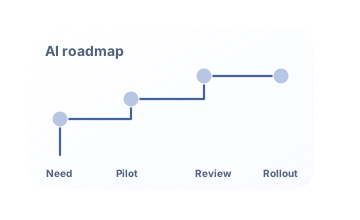
Let’s turn your needs into a clear work plan.
A demo can be impressive; making it useful in daily work requires different conditions. ReklamKlik reviews recurring tasks, data sources, and team expectations together. We prepare an actionable roadmap with measurable pilots, accountable owners, and decisions on how to proceed.
What will you have at the end of the work?
- Workflow and data inventory
- Prioritized pilot roadmap
- Cost and responsibility framework
Scope, delivery schedules and responsibilities are clarified together during the quotation stage.
Who is it for?
Businesses seeking concrete AI opportunities. Value and feasibility before tool selection.
Where should we start the conversation?
- Recurring tasks and decision needs
- Data and access conditions
- Team capacity and budget
What do we address together?
Implementations planned around your needs and the scope of each area.
Workflow and data inventory
We inventory recurring tasks, the data used, and decision owners. Tasks suitable for AI are distinguished from needs suited to rule-based automation.
Value and feasibility matrix
Business value, data suitability, and implementation costs are compared. Pilot candidates are assessed for operational workload as well as short-term impact.
Data and access risk assessment
We define the pilot’s data classification, access roles, and limits on transfers to external providers. Human oversight for sensitive records and irreversible actions is built into the design.
Pilot success criteria
Actual tasks, acceptance criteria, and stopping conditions are documented for the pilot. Success is not defined solely by the volume of output generated.
Cost and operations plan
We include model, integration, testing, and maintenance costs in total operating costs. Responsibility for content updates, error tracking, and user support after the pilot is assigned.
Human oversight and responsibilities
We document who verifies output, who takes over in exceptions, and which decisions will not be automated. Training and acceptance criteria are added to the operations plan.
A clear purpose and deliverable at every step.
From initial assessment to implementation, and from implementation to regular improvement.
Discovery and opportunity gathering
Recurring tasks, decision needs, and data sources are inventoried. Work that can be addressed with simple rules or automation instead of AI is identified separately.
Prioritization and pilot design
The pilot is selected through a value, feasibility, and risk matrix. The roadmap includes success criteria, cost ceilings, and human oversight.
Results and scaling roadmap
Pilot output quality and actual workload savings are measured. We recommend continuing, revising, or stopping alongside an assessment of maintenance and team capacity.
How do we assess success?
- Achievement of pilot objectives
- Verified workload savings
We compare task time, accuracy, intervention, and total usage costs before and after the pilot. A working demo is not evidence of business value; gains are verified through actual task examples.
Questions about AI Strategy and Roadmap.
Are definite results guaranteed in 90 days?
The schedule depends on scope; commercial results are not guaranteed.
Should AI be used for every task?
No. Simple automation may be more suitable.
Which task should be selected for the first pilot?
Priority goes to frequent tasks with accessible data and controllable errors. Value, integration costs, and team responsibility are assessed together.
Services contributing to the same goal.
Services we can plan together
AI and CRM Consulting
From customer information to supervised suggestions.
Discover the service ↗ AI & Automation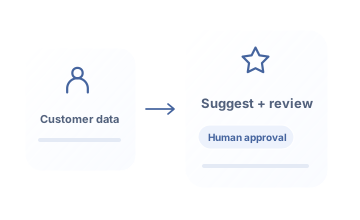
AI Agents and Automation
Triggers, validation and human approval.
Discover the service ↗ Strategy & Consultancy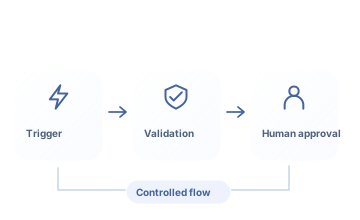
Digital Marketing Consulting
Let’s assess the current situation together.
Discover the service ↗
Before choosing a service
ask the right questions.

Request a quote for your needs.
Share your goal and current situation. Let’s define scope, priorities and the next step together.
0543 862 94 05merhaba@reklamklik.com